

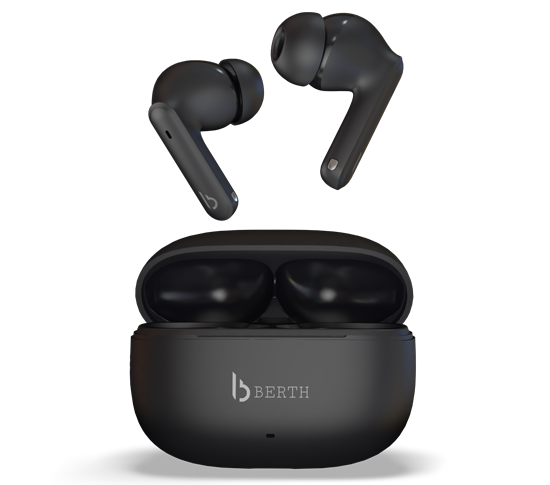
Active Noise Cancellation (ANC)
ANC is a technology designed to reduce unwanted ambient sounds by using microphones and speakers. Here’s how it typically works:
- Microphone Pickup: Tiny microphones on the headphones or earbuds pick up external sounds, such as the hum of an airplane engine or the chatter of a coffee shop.
- Noise Analysis: The captured sound is analyzed by an ANC circuitry, which identifies the frequency and amplitude of the noise.
- Anti-Noise Generation: The circuitry then generates sound waves that are the exact opposite (180-degree phase difference) of the ambient noise, called anti-noise.
- Cancellation: These anti-noise waves are played through the headphones simultaneously with the audio you want to hear, effectively canceling out the unwanted noise.
Advantages of ANC
- Effective at reducing consistent, low-frequency sounds like engine noise or air conditioning.
- Improves the listening experience by eliminating distractions, allowing for better focus on the audio content.
- Can be used in both wired and wireless headphones.
Limitations of ANC
- Less effective against sudden or irregular noises, such as people talking or doors slamming.
- May introduce a slight hiss or pressure sensation, known as the “eardrum suck,” especially in lower-quality ANC systems.
- Typically consumes more battery power, especially in wireless headphones.
Environmental Noise Cancellation (ENC)
ENC is a technology that enhances the quality of incoming audio signals by reducing environmental noise during voice calls. Here’s how it works:
- Microphone Array: Similar to ANC, ENC uses microphones to pick up ambient sounds, but with a focus on isolating the user’s voice.
- Voice Identification: The ENC system identifies the user’s voice amidst the ambient noise.
- Noise Suppression: Once the user’s voice is identified, the system suppresses the ambient noise, ensuring clearer communication.
Advantages of ENC
- Particularly useful for phone calls in noisy environments, ensuring clearer voice transmission.
- Helps in maintaining the user’s voice quality during calls, even in challenging acoustic conditions.
Limitations of ENC
- Primarily beneficial for voice calls and not for general audio listening.
- May not be as effective in extremely noisy environments with complex sound patterns.
In conclusion, while both Active Noise Cancellation (ANC) and Environmental Noise Cancellation (ENC) aim to improve the audio experience by reducing unwanted noise, they serve different purposes and operate in different ways. ANC is ideal for immersive audio experiences, especially in environments with consistent noise, while ENC enhances voice quality during calls in noisy surroundings. Understanding the differences between these technologies can help you choose the right audio device based on your specific needs.

